

 De
De  Es
Es  Fr
Fr  Pt
Pt 

-
-
-
-
-
-
-
-
-
-
-
-
-
-
-
-
-
-
-
-
-
-
-
-
-
-
-
-
-
-
-
-
-
-
-
-
-
-
Export Layout to Model
-
-
-
-
-
-
-
-
-
Export Layout to Model
 Menu: File >
  Export Layout to Model…
Layout context menu: Export Layout to Model …
 Command line: ExportLayout
Export of all visible object of the current layout to model space of a new drawing.
To export layout:
1. Run Export Layout to Model command.
2. In Export Layout to Model Space Drawing dialog box specify the storage location and name the file.
3. Click Save.
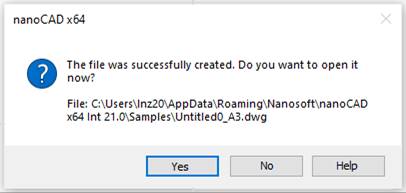
To open the drawing in the current working session, click Yes in the open information window
Drawing objects that extend beyond the viewport boundaries are transformed to best match their appearance on the layout. For example:
· XLINE and RAY objects become LINE objects;
· CIRCLE, partially visible on the layout, becomes an ARC object after export.
Viewport boundaries are converted to Polylines (PLINE).
If different visual styles are applied to different viewports on a layout, only one visual style will be applied to the new drawing.
A single object visible in multiple viewports appears as multiple objects in the drawing after export.
Object grouping, constraints, and named views are not exported.
The Export Layout to Model command is not applicable to the following objects:
· objects located on turned-off or frozen layers;
· objects that are not visible in the layout’s viewport;
· light sources.
As a result of using the Export Layout to Model command, some objects are converted to anonymous blocks with the names *U<sequence number>:
· dimension and blocks that extend beyond the viewport boundaries;
· associative arrays, 3D arrays;
· similarity dimension;
· tables;
· leaders;
· and other user-defined objects.